Showing posts with label vegetables. Show all posts

Friday, January 18, 2013

secret smoothies


During the summer months - when it was hot and I was tried from a morning at the farm - smoothies became one of my favorite snacks. Lately though I've been making them a bit differently than I used to: now, I put veggies in them.

It's one thing if I enjoy them. But a few weeks ago I put a 1/2 cup of raw spinach in a smoothie I made for my eleven year old brother. Upon taking a sip, he didn't notice. I thought I was being so crafty, so sly. (He knows now and was only mildly impressed.)

So here are the basic ways I sneak vegetables into smoothies. Depending on how I concoct it, one glass can sometimes contain two to three servings of fruit/veg.


Banana smoothie base:
3 ice cubes
1 banana, peeled
1/4 - 1/2 cup plain yogurt
1/4 - 1/2 cup water (or milk of any kind)
1/2 - 1 teaspoon honey or maple syrup

Toss everything into a blender and give it whirl until the ice is chopped and everything is well combined. Add veggies if desired.

Vegetable additions:
Spinach → slight change in taste, no change in texture if when blended.
Raw broccoli → change in taste noticeable, texture becomes gritty.
Lettuce → makes smoothie bitter, no change in texture. 

To disguise the veggies, add:
Spices to taste (cinnamon, nutmeg, ginger, cloves)
Nut butter
Raw/whole nuts
1/4 - 1/2 cup other fruit (frozen blueberries and strawberries work well)
fresh orange juice in place of water or milk

Add desired vegetables and disguises and blend for another 1 - 2 minutes, until there are no longer any chunks of anything.


(Above, my breakfast smoothie containing lettuce and peanut butter, paired with toast from here.)

Friday, July 13, 2012

planting fall crops


What we did yesterday was real farming.
That's what Devin said. By which I think he means the work we did was pretty intense.
I hope that's what he means, at least. Because it was.

We planted a couple fall crops - broccoli, cauliflower and lettuce - in a field Devin let lie fallow for a year or two. The very first time I came to the farm, back in March (when I was considering doing my internship there), the chickens were situated on this very spot. Tuesday the grasses and weeds were mowed down and soil was prepared with Jean's David Bradley


Devin ran the roto tiller down the field, creating a furrow. Into that furrow we sprinkled alfalfa meal and crushed mollusk shells, which are high in calcium. It gives the plants an extra boost, since they take so much calcium from the soil (hence why brassicas, the family broccoli and cauliflower are in, are so rich in calcium). Then the plants were dropped in, pre-watered, covered up, and water again. And we watered downhill, starting at the steepest point so that it naturally ran down the trench.

As the sun rose over the trees, the temperature climbed. It wasn't nearly so hot as last week - that would have been brutal. It was just in the upper eighties, I believe.


I got to run the roto tiller for the first time. It's a beast of a machine that lurches when you run over a large rock and is tricky to turn around. But I got a feel for all the levers and switches. I prepped a section of the field; I couldn't yet manage to dig a furrow (not a straight one, anyway).


We planted six very long rows.

Around nine or nine thirty, a mass of dragonflies came out. Looking up now and then, I watched them crazily buzzing about. And the blue bird came by too. Ruby was our companion in the morning; she rode in the truck with us up to the field and took to standing in the furrows Devin made.


Monday, July 9, 2012

on diversity and preservation


Exactly a year ago, I came across this image in the July 2011 issue of National Geographic


It's a comparison of the varieties of seeds available a century ago versus those found in the National Seed Laboratory in 1983. The change eighty years had is shocking and I think after read the article I told people about it for days. 288 of beets! Now we have seventeen. The diagram shows 554 varieties of cabbage. Now a mere twenty eight are left. Charles Seibert writes in the article that "In the United States an estimated 90 percent of our historic fruit and vegetable varieties have vanished."

One of the first things I did at the farm was start seeds with Devin. On a rainy day, we went into the house, sat on the floor and he showed me his collection of seed packets; so many kinds of melons, of tomatoes, of greens. Now, as we're harvesting them, I'm learning some of their names. The other day we harvested a type of garlic called "music." There are tomatoes called "pineapple" and "noir." When we shop solely at the grocery store I don't think we get the whole picture. For all the choices we have there and the bounty we seem to have access to, we've lost the diversity our ancestors took for granted just a few decades ago.

The importance of having a diversity of plant varieties isn't all about aesthetics (as in a honey colored variegated tomato v. a plain red one) or even taste. Certain varieties developed and were bred so they would be adapted to a specific environment; the local environment. But in an attempt to produce the greatest yields, farmers began and now continue to favor plants that are meant to adapt to many kinds of environments. These plants are genetically engineered and biologically less stable than the heirloom varieties.

And it isn't just seeds. There are heritage breeds of livestock; chickens, cattle, sheep, pigs.

Though the biodiversity side of this issue is widely important, I feel the cultural impact is critical as well. An extinct breed or variety is a cultural artifact that has been lost. The result is generalization. Societies shift and change, true, but we need to remember that the story of people cannot be separated from the story of the land.


I highly recommend reading the article from National Geographic. And also this post from RAFI-USA.
For heirloom seeds, I suggest taking a look at Baker Creek.


Friday, July 6, 2012

all about beets


I really love beets.

This is a recent development. Until starting my internship I'd only had one or two chances to consume these lovely root veggies and I'd never encountered the greens. Both, in my mind, are excellent. But people seem to either hate them or adore them. True, they're quirky. The best way I can describe their flavor is "earthy." But I think generally when people dislike a food, or think they dislike a food, it's because the first time they had it (often as children) it was poorly prepared. 


Beets are very closely related to chard; the one is cultivated mainly for its root and the other for its leaf. They come in a variety of colors and patterns: crimson, purple, white, gold, solid, stripped. They've been used in folk medicine as a treatment for fever, constipation, and a dressing for wounds. Also, they're a good source of folate, potassium, manganese, and betaine (the last of which is particularly good for digestion).


I have yet to really experiment with cooking beets. But so far this is what I do:

Separate the greens from the roots and chop the greens. Saute them in olive oil, along with garlic scapes or onions, until the leaves are well wilted. Plate them and top with a poached egg. Sprinkle on a little feta or goat cheese, if you like. Along with some homemade bread, this makes a very fine lunch.

The roots, the actual beets, I like roasted. They're like vegetable candy.
A few weeks ago I made a pizza of vegetables: sauteed chard and roasted zucchini, onions and beets with mozzarella sprinkled on top. The beets added a curious, but pleasant, sweetness among all the savory-ness. 

I've also had them roasted on a salad, here. And golden ones, here.


Some things I'd like to try with beets:
Chocolate beet cake with beet cream frosting
Beet and cabbage coleslaw
Roasted beet and blood orange salad
Beet pasta with ricotta
Savory beet soup
Beet "rawvioli" with pesto oil

Tuesday, July 3, 2012

at the farm again


This morning I was at the farm earlier than I'd ever been. I was back for the first time in over a week. And very glad to be.


Never mind that the temperature rose much too quickly and much too high; 90 degrees or so. While we harvested beets and carrots, Devin and I swapped stories about our trips (he just got back from a week in the Bahamas). He told me the plans he has for the rest of the week, including a massive garlic harvest. We prepped a few of the items for tomorrow's share, talked about music (Mumford and Sons and Fleet Foxes), and books (he just finished 1491), picked tomatoes out of the greenhouse, and weeded around the outdoor eggplants.


Wednesday, June 13, 2012

rainy day supper


Yesterday was chilly and very, very wet. It was a good day for curry and cornbread.


Roasted Vegetable Curry
(adapted from An Everlasting Meal)
1/2 onion, chopped
1 small garlic scape
3/4 teaspoon curry powder
1/2 teaspoon ground cardamom
1/2 teaspoon ground cumin
a pinch of cinnamon
1/2 red pepper flakes
1/2 cup canned chickpeas 
1/2 cup to 1 cup coconut milk
1 cup other liquid (stock or water)
2 cups cooked vegetables (I used roasted carrots, roasted broccoli and peas)


Cook onion and scapes in olive oil in pot. Add spices and pepper flakes. Once spices are fragrant add the beans (liquid and all), then the liquids. Cook, stirring from time to time, at a slow simmer until the beans are very tender. Add vegetables and cook for 15 minutes or so, until everything is well integrated.


Skillet Cornbread
(adapted from 101 cookbooks)
3 tablespoons butter
1 cup whole wheat flour
3/4 cup fine-grain cornmeal
1/4 cup brown sugar
1 tablespoon baking powder
1 1/2 teaspoons salt
1 cup buttermilk (or fake buttermilk)
1 large egg
2 1/2 cups corn, frozen and brought to room temp


Preheat your oven to 350F degrees, with a rack in the middle.


Just before you make the batter, in a small saucepan, melt the butter and pour into a 9-inch cast iron skillet or equivalent baking dish. Place in the hot oven.


In a medium bowl whisk together the flour, cornmeal, sugar, baking powder and salt. In a separate bowl whisk together the buttermilk, egg, and corn. Pour the wet ingredients over the dry and stir until just combined. Very carefully remove the hot pan with butter from the oven. Fill it with the cornbread batter, pushing the batter out to the sides if needed. Bake for 30 - 40 minutes or until the edges are golden and the center is just set. 


Friday, June 8, 2012

inside the first share


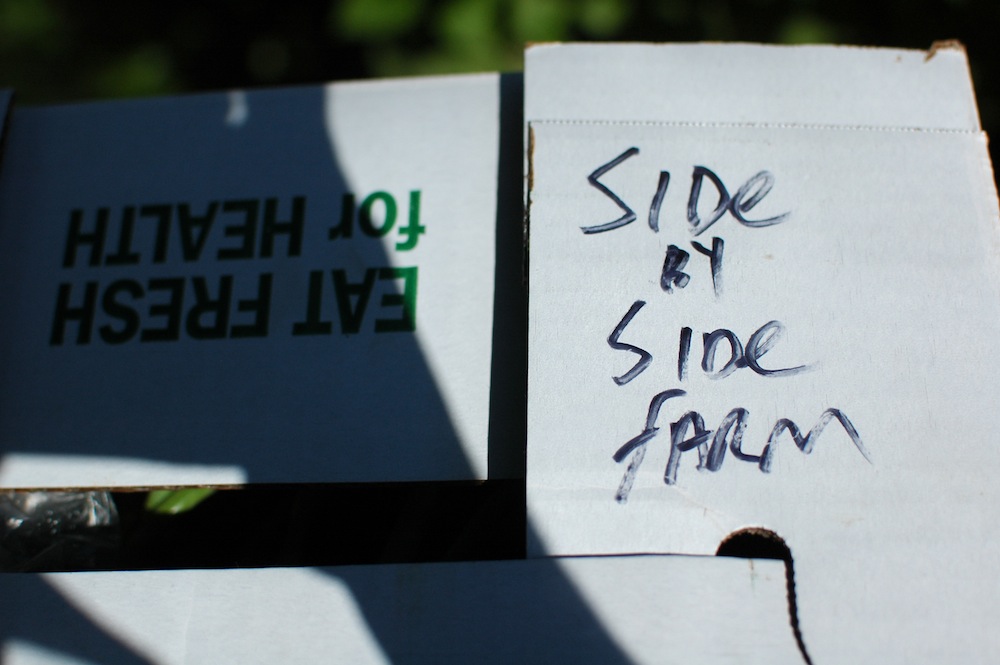
Inside our first share from Side by Side:
sugar snap peas 
lettuce 
kale 
garlic scapes 
sprouted lentils 
arugula
bok choi 
   
The peas were used in a stir-fry with string beans (from our garden) and ginger root. The lettuce, lentils and arugula is being put on wraps, sandwiches and salads. I'm planning to turn the kale into a kale and feta crustless quiche. I'll probably throw in some sauteed garlic scapes too (a post all about these little treasures is coming soon). The bok choi we consumed after roasting it (the general consensus being that it would probably be yummier cooked some other way). 


For more information on CSAs, read this post. 


Friday, May 25, 2012

hilling potatoes


Wednesday afternoon the sky turned grey. I heard an occasional roll of distant thunder.

After transplanting a decent amount of eggplants and putting row cover over some peas, I believe, Devin and I turned our attention to hilling potatoes. "This is real farmwork now," he said. It was definitely the most intense physical work I've done in a while - more so than any kind of exercise.

First Devin went down between the rows of potatoes with the rototiller, to loosen the soil. Then, with our hoes, we pulled the soil up and around the potato plants - sometimes covering them completely. The higher the hill you make around a potato plant, the more potatoes you get.

At one point I looked ahead, realized how far I had to go just down the row, and that there were twenty-some more rows to go, and felt a little overwhelmed. But Devin said you can't do that - can't look ahead or behind. You have to keep focused on where you are at the moment.

I came home Wednesday afternoon totally invigorated, totally sure of why I'm doing this. Devin's enthusiasm and drive are are really inspiring. And I think I'm also getting a clearer picture of what I want kind of work I want to do and what I want to pursue and why.

An hour after I left, the rain came.


Thursday, May 24, 2012

first harvest


Wednesday morning I arrived at the farm early. It was my first time being involved with a harvest. We picked peas, carrots, kale, beet greens, radishes, cilantro, and spinach for a something-or-other (quesadillas, I think) Joel, the owner of Juliana's in the Village, will be concocting at his restaurant.

And at 7:30 in the morning that was excellent light.


Right where I was standing while taking the photo above is the wash station. For the greens, we dunked them in cold water and then, depending what type they were, took them for a spin in the largest salad spinner I've ever seen. Everything else was washed off, bunched up or put into bags. They were delivered to Joel later that morning.

Lunch was just as plentiful. It consisted of some of what we'd harvested - carrots, beet greens, cilantro all sauteed together in sun dried tomato oil. Then Devin cracked a few eggs into it (eggs from the resident chickens, of course), spread some goat cheese (from Charlottetown Farm) on warmed tortillas, spooned some of the egg/veggie scramble on it, folded it up, and viola! Devin said that is why he got into farming - the food. Such good food.

Wednesday, May 23, 2012

starting seeds and planting ginger


For the second Tuesday in a row it was grey. No more rain, but everything was still moist. Devin and I started out by weeding a spinach bed, then we moved inside to the greenhouse attached to the house and began starting seeds. After giving me instructions, he left me on my own and went to prepare the other greenhouse with the rototiller.

I started melons, squash, lettuce, onions and quinoa. Above are the onion seeds. Below are the quinoa seeds. Beautiful, aren't they? 


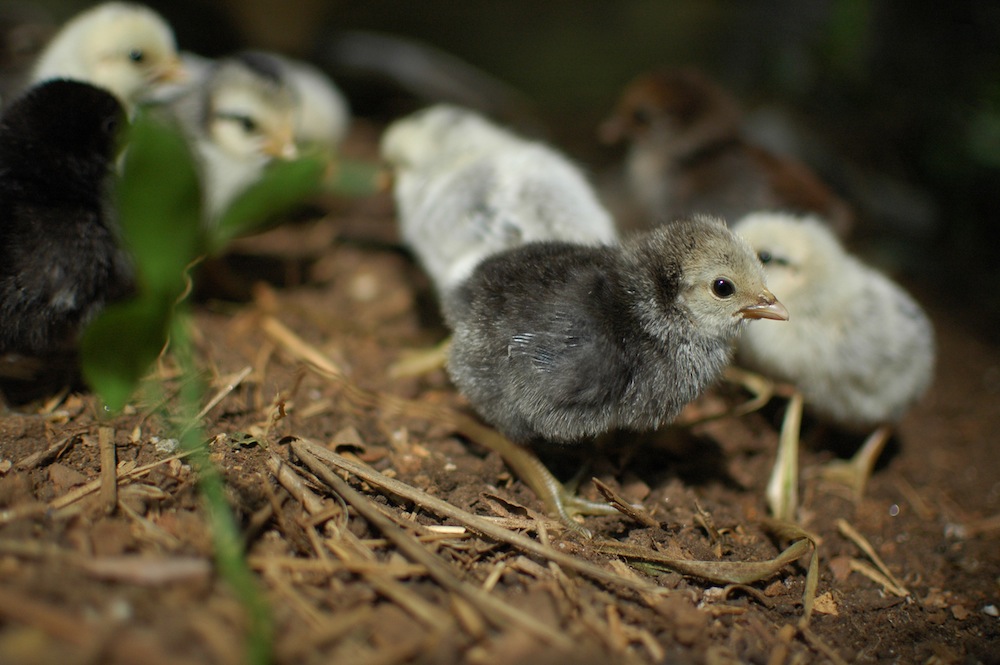
And these were my companions in the greenhouse. Newly hatched.


Once the seeds were in and put "under the lights" in the basement, Devin and I planted the ginger. The roots had been waiting for months, in bins under the house. 


We planted them in the "downstairs" (lower field) greenhouse - each root hand placed about 6 inches apart in a deep trench and then cover them up. They'll be ready for harvesting in October. 


Wednesday, May 16, 2012

planting tomatoes


Our first project of the day: planting two varieties of heirloom tomatoes, creme brulee and pineapple

Before beginning at Side by Side (before yesterday, in other words) I would say I only knew the very basics of planting - and I usually killed most things I planted. Aesthetically, I adore nature; I take walks specifically so that can peek at neighbors' gardens, at the field on the edge of town, at trees catching evening light. I have books on flower folklore and am glad that I know what little I do about plant varieties. I go out into my grandfather's garden and snip his herbs to use for supper. But that wasn't enough. I want to have a good understanding of and interaction with this planet's ecological systems. Not just for this summer but for the whole rest of my life. 


So today I got a lesson in tomatoes and tomato planting. You could plant them upside down, Devin said, and they'd still survive. We didn't do that, however - we put them right side up, deep in a hole that had the bottom broken up and a little bit of what he called "agri-knight" (which included crushed mollusk shells and kelp) sprinkled in it. Then the dirt was packed down and well watered. Sporadically throughout the rows - these tomatoes had peppers and lettuce as their neighbors - we planted borage. Devin says things like that - like putting in plants with acknowledgement to how other plants will shade them, with how water moves - make all the difference.